
The Fruit Audit
This module addresses one of the most common points of confusion in metabolic health. By applying the "RN Insight," we move past the simplistic "fruit is healthy" narrative to understand the clinical impact of fructose on the liver and insulin signaling.
Pillar: Nutrition | Module: The Fruit Audit
“Nature’s Candy vs. Metabolic Integrity”
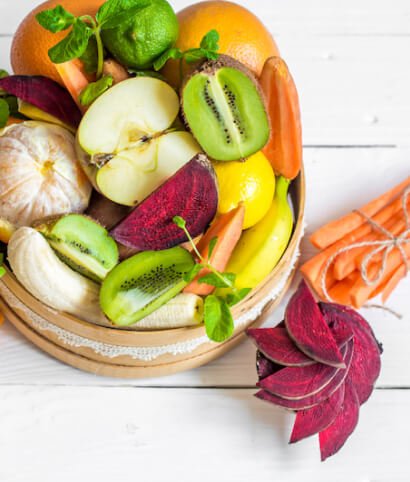
In the modern food landscape, “fruit” is no longer what it was for our ancestors. Selective breeding has created varieties that are significantly higher in sugar and lower in fiber than their wild counterparts. At OptiWellness For Life®, we don’t “ban” fruit; we audit it for its metabolic cost. This module is based on the research of Dr. Robert Lustig (UCSF) and Dr. Richard Johnson, focusing on how fructose bypasses standard satiety signals to drive fatty liver and insulin resistance.
The RN Insight: Your body processes glucose (starch/sugar) in every cell, but fructose is processed almost exclusively in the liver—much like alcohol. When the liver is flooded with fructose, it converts the excess into “palmitate” (fat), leading to Non-Alcoholic Fatty Liver Disease (NAFLD) and a “leaky” metabolism. To achieve Sovereignty, you must learn to choose fruits that provide micronutrients without the metabolic tax.
1. The Metabolic Fruit Hierarchy
Not all fructose is created equal. We categorize fruit based on its Glycemic Load and Fructose-to-Fiber ratio.
Category
The Sovereign Choice
The Metabolic Disruptors
Examples
Berries (Raspberries, Blackberries, Strawberries), Lemons, Limes, Avocado, Olives.
Tropical fruits (Mango, Pineapple, Banana), Grapes, Dried Fruits, Juices.
Fiber Profile
High cellular fiber; slows sugar absorption.
Low fiber relative to high sugar concentration.
Impact
Minimal insulin spike; liver-friendly.
Rapid fructose flood; triggers “Fat Storage” mode.
RN Rule
“Eat the whole fruit, never the juice.”
“Treat as a dessert, not a health food.”
2. The 3-Stage Fruit Protocol
Stage I: The “Juice & Dried” Elimination
The Clinical Reality: Removing the water and fiber from fruit turns it into a metabolic disruptor.
- The Rule: Zero fruit juice or dried fruit. Without the “fiber matrix,” liquid fructose hits the liver instantly, triggering Uric Acid production—a primary driver of hypertension and weight gain.
- The Transition: If you crave the flavor, use a “Sovereign Swap”: Sparkling mineral water with a squeeze of fresh lime and a few crushed mint leaves.
Stage II: The "Satiety Anchor" for Fruit
Never eat fruit “naked” (on its own).
- The Action: Always pair fruit with a Protein or Fat Anchor. For example, 1/2 cup of raspberries with heavy whipping cream or a few walnuts.
The Biology: The fat and protein slow the gastric emptying, ensuring the fructose enters the portal vein at a pace the liver can manage without triggering lipogenesis (fat making).

Stage III: Timing for Metabolic Flexibility
Dr. Richard Johnson’s research shows that the timing of sugar matters.
- The Action: Consume fruit at the end of a meal, never as a morning snack on an empty stomach.
- The Result: The “Fiber Shield” from your meal’s vegetables further protects your liver from the fructose hit, maintaining a stable glucose and insulin graph.
The Fruit Audit Tools
The Science: High fructose intake raises Uric Acid, which tells your cells to "store fat for winter."
The Action: If you struggle with stubborn weight or high blood pressure, limit even "Sovereign" fruits to one serving per day until your metabolic markers stabilize.
The Science: A modern apple has the sugar equivalent of a mid-sized candy bar but with slightly more fiber.
The Action: Use the "Berry Rule." Berries are the only fruits that consistently align with a high-protein, nutrient-dense lifestyle because their seeds and skins provide the necessary fiber to offset their sugar.
The Action: Keep organic frozen berries in your freezer.
The Benefit: They are picked at peak ripeness (highest micronutrients) and provide a "mouth hunger" crunch that satisfies cravings without the dopamine loop of processed sweets.
Supporting Evidence: The Fructose Evidence Table
Expert / Study
Core Philosophy
Clinical Outcome
Dr. Robert Lustig
Fat Chance / Nature’s Toxin
Fructose is a “chronic dose-dependent liver toxin” that drives the metabolic syndrome epidemic.
Dr. Richard Johnson
The Fat Switch
Fructose activates an ancient survival switch that triggers overeating and fat storage.
Journal of Hepatology
NAFLD & Fructose
High fructose intake is the leading dietary cause of fatty liver, even in non-drinkers.
The OptiWellness™ Takeaway
“Don’t let ‘Nature’s Candy’ hijack your liver.”
True Metabolic Sovereignty means enjoying the vibrance of fruit without becoming a slave to its sugar. By choosing berries, anchoring them with fat, and respecting your liver’s capacity, you turn fruit back into what it was meant to be: a seasonal nutrient boost, not a metabolic burden.
 English
  Spanish